For Australian businesses experiencing supply chain volatility and disruptions, visit the Go Global Toolkit for the latest updates and support available.
Japanese consumers are drinking less alcohol and becoming more selective about what they drink. For Australian wineries, that creates opportunities to compete on quality, regional identity and suitability for Japanese food – while remaining attentive to price.
Australian wine exports to Japan reflect this shift, with the value of exports growing 10.5% to A$50.8 million in the year ending June 2026 (source: Australian Wine Export Dashboard). Trade enquiries around premium wine regions such as the Yarra Valley and Tasmania have also increased.
Powered by the Accessing New Markets Initiative (ANMI), Austrade and Wine Australia partnered to host the Australian Wine Japan Roadshow 2026 in September, with additional support from state governments. Sixty Australian wineries and 23 importers visited Osaka, Tokyo, Nagoya and Fukuoka.
Support from ANMI amplified the event through multiple channels, helping build the Australian wine brand, communicate its quality and diversity, and attract more than 500 key trade and media.
Wine Australia is part of the Australian Grape and Wine consortium, a member of the Trade Diversification Network working with government to support exporters to diversify and grow into new markets.
‘It is encouraging to see what can be achieved when government and industry work together to create meaningful opportunities for Australian wineries to connect with trade and industry in market,’ says Sarah Roberts, Regional Manager Asia Pacific, Wine Australia.
‘At a time of continued global uncertainty, maintaining strong engagement in established markets while building awareness and pursuing opportunities in new and emerging markets will help support the long-term growth and resilience of the Australian wine sector.’
Wine masterclasses increase positive perception of Australian wine
Regions including Tasmania, the Yarra Valley and Margaret River are gaining recognition, supported by interest in provenance, sustainability and regional stories.
A series of masterclasses were held for Japanese wine industry professionals during the roadshow to explore opportunities for Australian wine through discussions with local industry speakers and regionally sponsored sessions. Topics included Yarra Valley Cool and Collectable Classics, Victorian Chardonnay and Pinot Noir, and South Australian Sustainability and Innovation, presented by leading sommelier Miyuki Morimoto.
‘Tasting the wines gave buyers a clearer understanding of modern Australian wine, unique characteristics, and the influence of winemaker and region,’ says Rosemary MacDonald, Japan and South Korea Country Manager, Wine Australia.
Roadshow feedback indicated buyers were becoming increasingly interested in cool-climate wines with mineral-driven, refined and elegant characteristics. Buyers also expressed interest in multi-country tastings to assess Australian wines alongside their competitors.
Through the masterclasses, positive perception of Australian wine increased from 80% to 90%, and 72% of respondents stated they are likely to expand their Australian wine range.
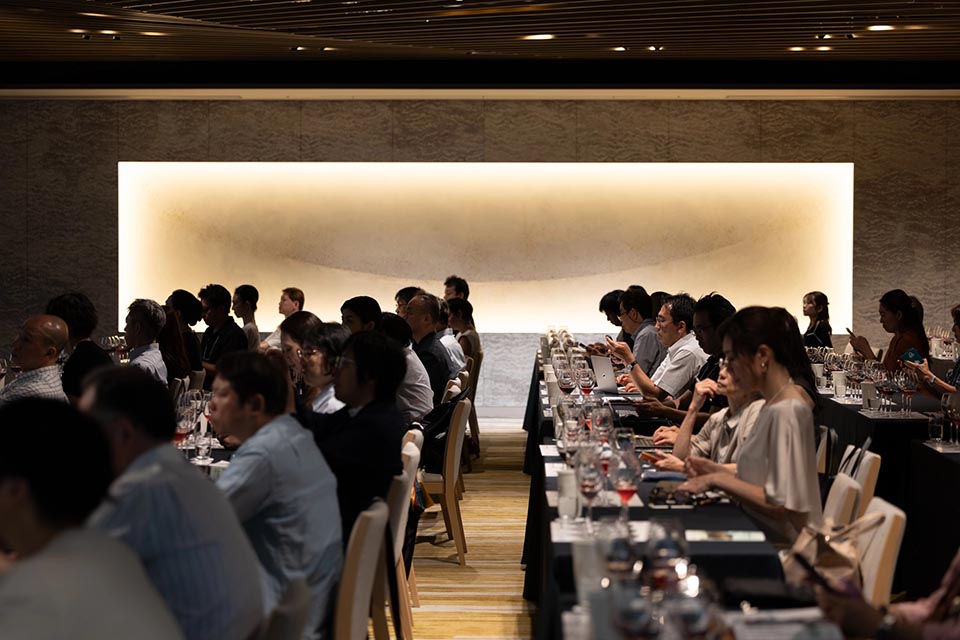
Japanese wine industry professionals at a masterclass.
Premium positioning needs a clear value proposition
The rising cost of European wines, particularly those from France, is creating an opening for high-quality Australian alternatives. However, the weak yen and pressure on household incomes also make Japan a challenging market for imported wine.
Tokyo-based Austrade Senior Business Development Manager Ayako Shiraishi says buyers continue to seek competitively priced wines, even as some see scope for Australian producers to command higher prices.
‘For Australian wineries, this means premiumisation should not necessarily mean focusing exclusively on high-priced wines,’ says Shiraishi.
The opportunity is to demonstrate what justifies a wine’s positioning: distinctive regional characteristics, quality and relevance to the consumer.
Consumer awareness matters
Growing recognition among buyers and sommeliers does not necessarily translate into broad consumer familiarity. Japanese importers reported low awareness of Australian wines among consumers. In some restaurants, wine may still be offered simply as “red” or “white”, with little information about its origin, region or grape variety.
These observations point to the need for targeted education and product uplift. Wineries and importers need to understand how much their intended customers already know, then tailor the information and tasting experience accordingly.
Japanese food can help make the case
Tokyo-based Austrade Trade and Investment Commissioner Kendall Draper says pairing Australian wine with Japanese cuisine offers a practical way to demonstrate its versatility and introduce consumers to unfamiliar regions or varieties.
‘Rather than asking consumers to change the way they eat or drink, we can show how Australian wine can complement familiar Japanese dishes and become part of everyday as well as premium dining occasions,’ says Draper.
For exporters and their partners, food-led tastings, restaurant collaborations and in-store promotions provide opportunities to translate regional stories into an experience consumers can judge for themselves.
Changing drinking habits warrant a closer look at format
Smaller households and more health-conscious drinking habits also raise a product question: could smaller bottles help Australian wine fit more occasions?
Smaller formats may appeal to people who live alone, are limiting their consumption or want to try several beverages in modest quantities. For exporters, this is an area to explore with importers alongside decisions about style, pricing and positioning.
The Japanese market requires persistence
For Ayako Shiraishi, one of the key insights from the roadshow is that success in Japan requires patience and persistence.
‘We would encourage Australian wineries to take a long-term approach,’ she says.
‘Continue building relationships and keep knocking on the doors of importers rather than becoming discouraged if opportunities do not emerge immediately.’
The roadshow highlighted growing recognition of Australian wine’s quality and diversity. Converting that recognition into sales will depend on making the offer relevant in price and presentation, and responsive to the ways the Japanese market eats and drinks.
Now is the time for Australian wine
Many Japanese consumers and wine traders visiting or working in Australia are bringing their enthusiasm for Australian wine home with them.
The perception of Australian wine among the Japanese wine trade has improved in recent years – an observation reflected in importer feedback. Many top sommeliers have spent time in Australia and are now strong advocates of the quality and free spirit of Australian wine. The taboo around screwcaps is also gradually fading as practicality and benefits become better understood.
The Discover Australian Wine Campaign, a sales program designed to support distribution and drive sales post-roadshows, returns in October and November 2026. The number of participating venues has grown from 44 last year to 175 this year, signalling a growing appetite within the market and excitement to actively promote Australian wine.
Find out more about exporting wine to Japan.
Go further, faster with Austrade
Austrade’s Go Global Toolkit helps you learn the export basics, find the right markets and understand market requirements.