
Australian life sciences companies met with international customers, investors and partners at AusBiotech 2026, leading to opportunities for commercial collaboration and international growth.
Funding from the Accessing New Markets Initiative enabled Austrade and Trade Diversification Network member AusBiotech to facilitate the participation of 72 international delegates from 53 organisations across 9 markets during Australia’s Biggest Week in Biotech.
Working with AusBiotech and Trade and Investment Queensland (TIQ), Austrade developed a comprehensive program of activities, including 275 targeted business meetings and introductions between international organisations and Australian research institutions, clinical trial providers and advanced manufacturing partners.
‘The biotech world is changing fast,’ says Rebekah Cassidy, Chief Executive Officer of AusBiotech. ‘Countries are looking to onshore a range of capabilities from clinical trials to advanced manufacturing.
‘We have been working closely with Austrade to help Australia’s biotech, medtech and health tech innovators navigate this changing environment. These include keeping and attracting more clinical trials in Australia, helping Australian innovators navigate new markets, and ensuring Australia’s wide-ranging health innovation capabilities are on show globally.’
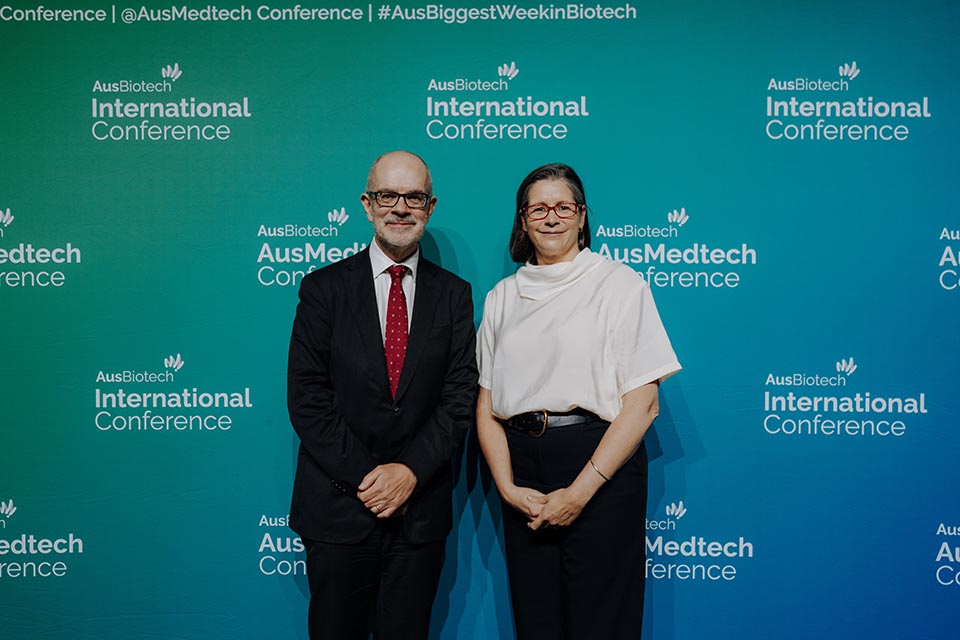
International markets meet Australian capability
Six Austrade Business Development Managers and representatives shared their knowledge of international customer demand and market-entry conditions, helping Australian businesses identify new partnership opportunities.
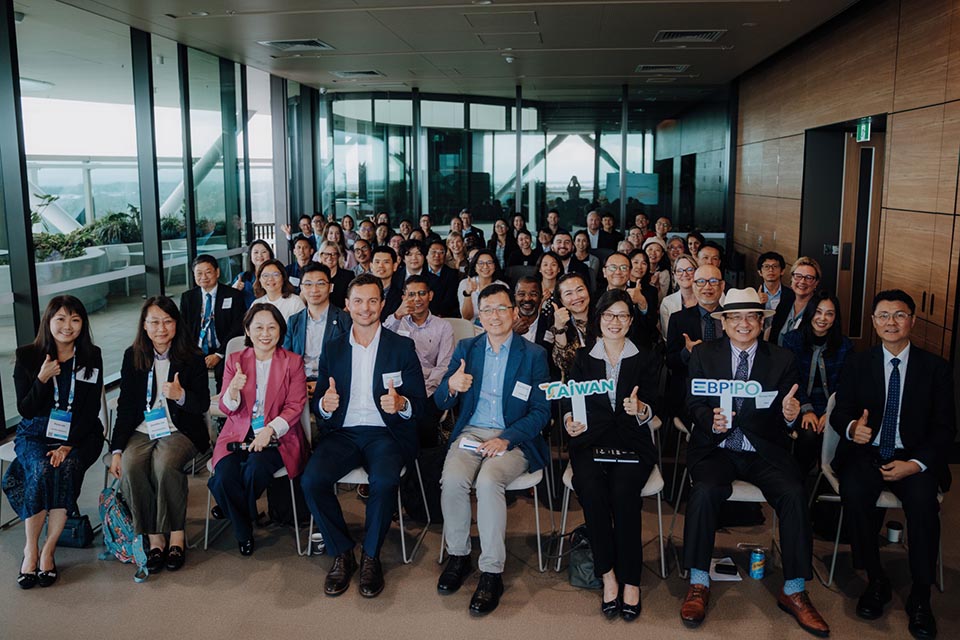
Twenty-one organisations from South Korea engaged with industry, visited sites and took part in an investment partnership roundtable, building on earlier work with Monash University. Taiwan’s delegation comprised 11 government agencies and bio-clusters, with industry partners also represented. One-on-one meetings at the Australia-Taiwan Biotech Forum explored opportunities spanning research collaboration, clinical development and manufacturing.
Ten pharmaceutical and vaccine companies from India sought partnerships that drew on Australia’s biotechnology strengths, clinical trial capabilities and manufacturing expertise. Seven delegates from Chinese biotech and pharmaceutical companies met Australian clinical trial providers and researchers to explore potential commercial partnerships.
For Japan, the focus was on forging research and commercial links between its pharmaceutical sector and Australian organisations. A targeted multi-city program showcased the expertise of Australian universities, biotechnology companies and clinical development providers.
European discussions explored stronger research links and commercial relationships with Australian organisations, supported by opportunities arising from Australia’s accession to Horizon Europe(Opens in a new tab/window). The United States program highlighted Australian life sciences capabilities to investors, government and industry. Participants included MSD, Alloy Therapeutics and Charles River Laboratories, alongside the Advanced Research Projects Agency for Health (ARPA-H).
Representatives from Singapore examined closer engagement with Australia’s life sciences ecosystem. The United Arab Emirates brought a regulatory perspective through the Emirates Drug Establishment, the country’s principal regulator for medicines and medical devices.
Connections made at previous conferences have led to commercial outcomes for Australian and international attendees.
PharmaEssentia, a Taiwanese pharmaceutical company supported by Austrade at last year's conference has established an Australian subsidiary at the Centre for Eye Research Australia(Opens in a new tab/window). It has also signed a Memorandum of Understanding with global contract research organisation Novotech to advance clinical development across the Asia-Pacific.
Australia-Korea engagement has also led to new institutional partnerships. The Korea Health Industry Development Institute agreed to collaborate with UQ and Queensland-based advanced manufacturing innovation centre ARM Hub across research, life sciences and innovation.
This year, Austrade facilitated a multi-city visit by ARPA-H, connecting the agency with Australian advanced therapies and biomanufacturing capabilities. ARPA-H has since selected UQ’s BASE mRNA Facility(Opens in a new tab/window) for its Genetic Medicines and Individualised Manufacturing for Everyone program, which is developing manufacturing and quality-control technologies for personalised RNA medicines.
Further outcomes are also emerging from engagement with China, India and Japan, with Austrade continuing to support a pipeline of opportunities arising from these connections.
Toolkit to promote Australian life sciences capability
Austrade CEO Dr Paul Grimes launched the ‘Why Australia for Life Sciences’ campaign, with work now underway on a supporting toolkit for release in early 2027.
Developed in partnership with AusBiotech, the campaign will include a unified Why Australia narrative to promote Australia’s life sciences capability globally, ensuring messaging reflects national priorities and represents the capabilities of all states and territories.
‘Australia has a world-class life sciences capability, and the AusBiotech Conference on the Gold Coast this year was a fantastic opportunity to showcase that talent to the world,’ says Dr Grimes.
‘I was particularly proud to launch the ‘Why Australia for Life Sciences’ campaign and to have 6 Austrade business development managers on the ground, helping Australian companies build connections with international customers and partners.
‘It’s a great example of what industry and government can achieve together through the Trade Diversification Network, creating real opportunities for Australian life sciences companies in global markets.’
ACTI: supporting Australian businesses to reach new markets
Government and industry are partnering to showcase Australia’s world-leading clinical trials capability to the world through the Australian Clinical Trials Initiative (ACTI). The program supports Australian clinical trials companies to expand and diversify their client base in new markets.
Powered by the Accessing New Markets Initiative, ACTI is a coordinated effort between Austrade; the Department of Health, Disability and Ageing, the Department of Industry, Science and Resources, state governments, and national peak industry bodies such as AusBiotech.
Learn more about the ACTI 2026–27 program(Opens in a new tab/window) and express your interest in upcoming events, starting in February 2027.
Go further, faster with Austrade
Austrade’s Go Global Toolkit helps you learn the export basics, find the right markets and understand market requirements.