For Australian businesses experiencing supply chain volatility and disruptions, visit the Go Global Toolkit for the latest updates and support available.
Australia’s Q-Sera and Japan’s Terumo Corporation have joined forces to launch a unique blood collection tube incorporating Q-Sera’s patented clotting technology in Japan. The VenoJect II RAPClot tube is the product of a five-year collaboration between the Australian startup and the Japanese medical manufacturer.
Q-Sera’s technology is based on the properties of coagulation proteins found in some snake venoms, with its lead active RAPClotTM manufactured as a recombinant protein. RAPClotTM clots all blood samples in just 5 minutes including anticoagulated samples, so serum can be separated for testing. By comparison, current technology can take between 15–30 minutes to clot and may not work where patients are taking blood thinners.
Faster and more reliable clotting with high-quality serum means more efficient laboratory management, less down time with testing equipment and quicker results for patients.
‘Q-Sera is pleased to announce the first launch of its patented technology by Terumo Corporation in the Japanese market,’ says Q-Sera CEO Michael Grant. ‘Japan has a history of innovation in blood collection tubes, with Terumo Corporation a leader in this sector. Together we look forward to launching this next-generation tube technology to benefit patients and the healthcare system.’
Snake venom provides impetus for innovation
Q-Sera’s journey from research to commercialisation started with 300 Queensland taipans at a snake farm in South Australia. University of Queensland researchers identified the proteins (prothrombin activators) in the venom that caused blood to clot instantaneously. These proteins have a unique mode of action and bypass normal coagulation controls, so they work just as quickly on blood containing anticoagulants.
Q-Sera was incorporated in 2012 to commercialise the intellectual property from this discovery. Development was supported by Australian life science investors:
- Brandon BioCatalyst (formerly the Medical Research Commercialisation Fund (MRCF)), managed by Australia’s largest life science focused venture capital firm Brandon Capital Partners
- Uniseed, Australia’s longest running venture fund and
- the UniQuest Extension Fund.
Australia’s national science agency CSIRO and the Australian National Fabrication Facility also supported Q-Sera’s development program.
Even with financial backing, bringing a medical device to market is a long process, explains Grant. Each stage of the process must be tested, and results must be published and verified. The devices must also go through regulatory approval processes. Once the product is launched, customers such as hospitals then need time to do their internal validation.
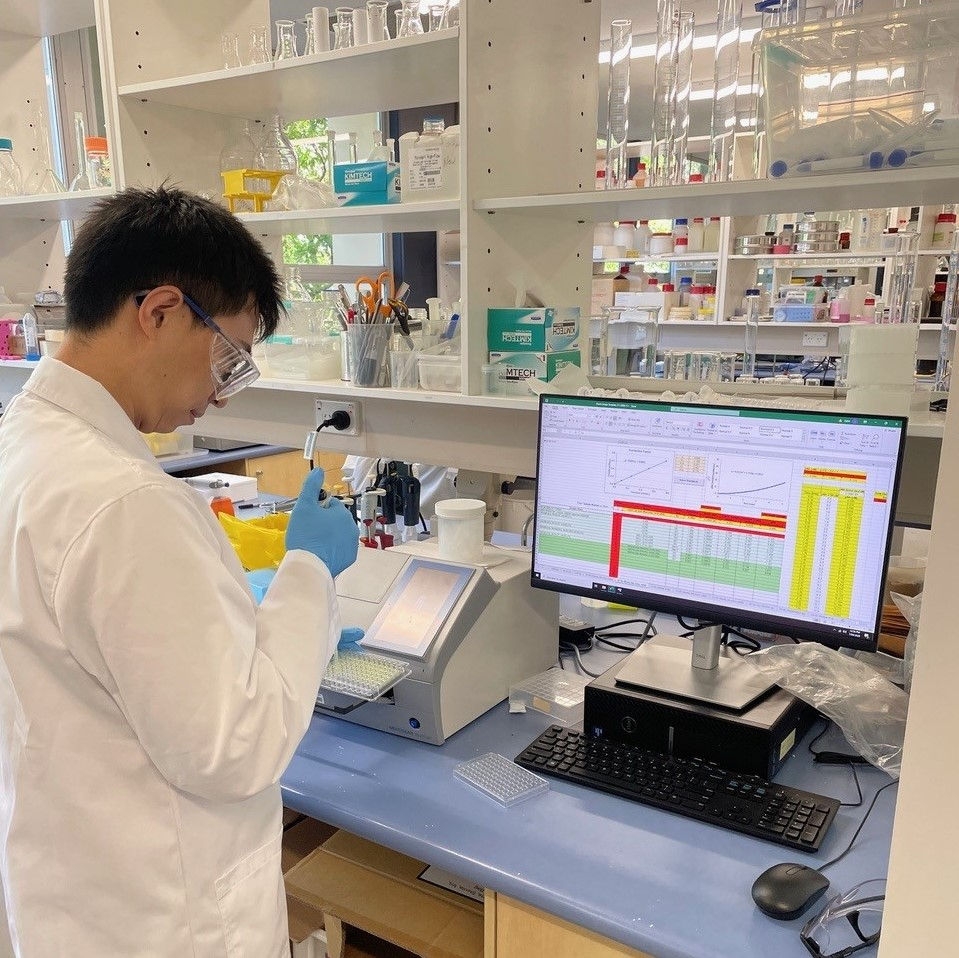
Q-Sera's RAPClotTM technology clots blood samples in just 5 minutes.
From research to reality
Developing a reliable recombinant version of the protein was a significant step. This allowed Q-Sera to offer a stable and high-quality active protein in commercial quantities for potential partners.
Q-Sera also focused on providing patent-protected formulations so that the technology can be used in standard blood collection tubes using standard production processes.
‘Our partners needed to be confident it fits into their manufacturing process,’ explains Grant. ‘In this case the protein needs to be stable enough to spray into tubes, heat to dry, then irradiate to sterilise the tubes.’
‘Q-Sera has been working with leading tube manufacturers globally, including Terumo in Japan. Japanese companies have a history of innovation in blood collection tubes,’ says Grant, ‘with snake venom components previously used in this market. It is logical that Terumo have been the first to launch in the Japanese market.’
Austrade’s support to reach key Japanese contacts
Q-Sera needed to get in front of research and development teams initially to discuss both the clinical and manufacturing potential of the product.
That was where Austrade came in. ‘Austrade had the relationships to connect us directly to the right people at Terumo,’ says Grant.
Austrade’s ‘badge of government’ backing reassured Japanese companies of the calibre of research behind the technology.
The Austrade Tokyo team also helped Q-Sera navigate early meetings with potential partners. They provided language support and helped Q-Sera gauge the level of interest.
In 2021, the two organisations formalised their partnership and the road to commercialisation began.
Today, Terumo Corporation has the exclusive rights to use Q-Sera’s technology to manufacture and market their VenoJect II RAPClot tubes in Japan. This has also involved scaling up the RAPClot recombinant protein, which can now be manufactured on a commercial scale using standard biopharmaceutical processes.
Opportunities beyond Japan
With a product now launched, Q-Sera is actively seeking partners beyond Japan. Discussions are underway with international and regional tube manufacturers, with Austrade support.
‘We’re confident we have really robust technology that can scale and transfer,’ says Grant. ‘It will be great to start the process of taking that to other markets.’
Go further, faster with Austrade
Austrade’s Go Global Toolkit helps you learn the export basics, find the right markets and understand market requirements.