For Australian businesses experiencing supply chain volatility and disruptions, visit the Go Global Toolkit for the latest updates and support available.
Australia’s Deakin University is celebrating. In March 2026, the university’s Indian campus graduated its first cohort of 43 master’s students. With postgraduate degrees in cyber security and business analytics, three-quarters of students have gained positions with major companies in India, including the local subsidiaries of NAB, Atlassian and BHP.
According to Ravneet Pawha, Deakin University Vice President for Global Engagement and CEO for South Asia, the academic success achieved by this first cohort endorses Deakin’s strategy in India. Meanwhile, high placement levels show how Australian education can deliver the expertise that high-tech industries need in India today.
‘Overseas institutions can come to India and help develop best practices in education,’ says Pawha. ‘The next 10 years are going to be extremely exciting in higher education in India, and I see Australian universities playing a major role.’
Deakin’s pioneering campus in India
When Deakin University opened a campus in GIFT City, Gujarat in 2024, it achieved a global breakthrough. It became the first overseas university to open a branch campus in India, able to confer degrees that meet global academic standards.
Since then, the campus has thrived. In March 2026, the first cohort of 43 students graduated from Deakin. The campus is set to expand capacity to around 100 per year from 2027.
Two factors have driven success. First, Deakin’s syllabus is attuned to local needs. Courses are designed to meet the commercial needs of companies in Gujarat’s high-tech GIFT City and the broader fintech ecosystem. Students gain practical, industry-relevant experience that will help them thrive in a competitive and increasingly technology-driven world.
The second factor is tuition fees. In India, students pay around half the cost of studying in Australia, enhancing both accessibility and affordability.
High success rates for first cohort
March 2026 was a moment of truth for Deakin’s India strategy. According to Pawha, success for the campus translates into world-class graduate quality and agile skilling.
‘Our first student cohort achieved a great outcome, with over 70% gaining jobs after graduation,’ she says. ‘Employers included NAB, Bank of America, Atlassian and BHP in India. Other students have gone on to create their own startups.
‘High graduate employability reflects Deakin’s success in working with GIFT City administrators and industry partners to embed the skills they need.’
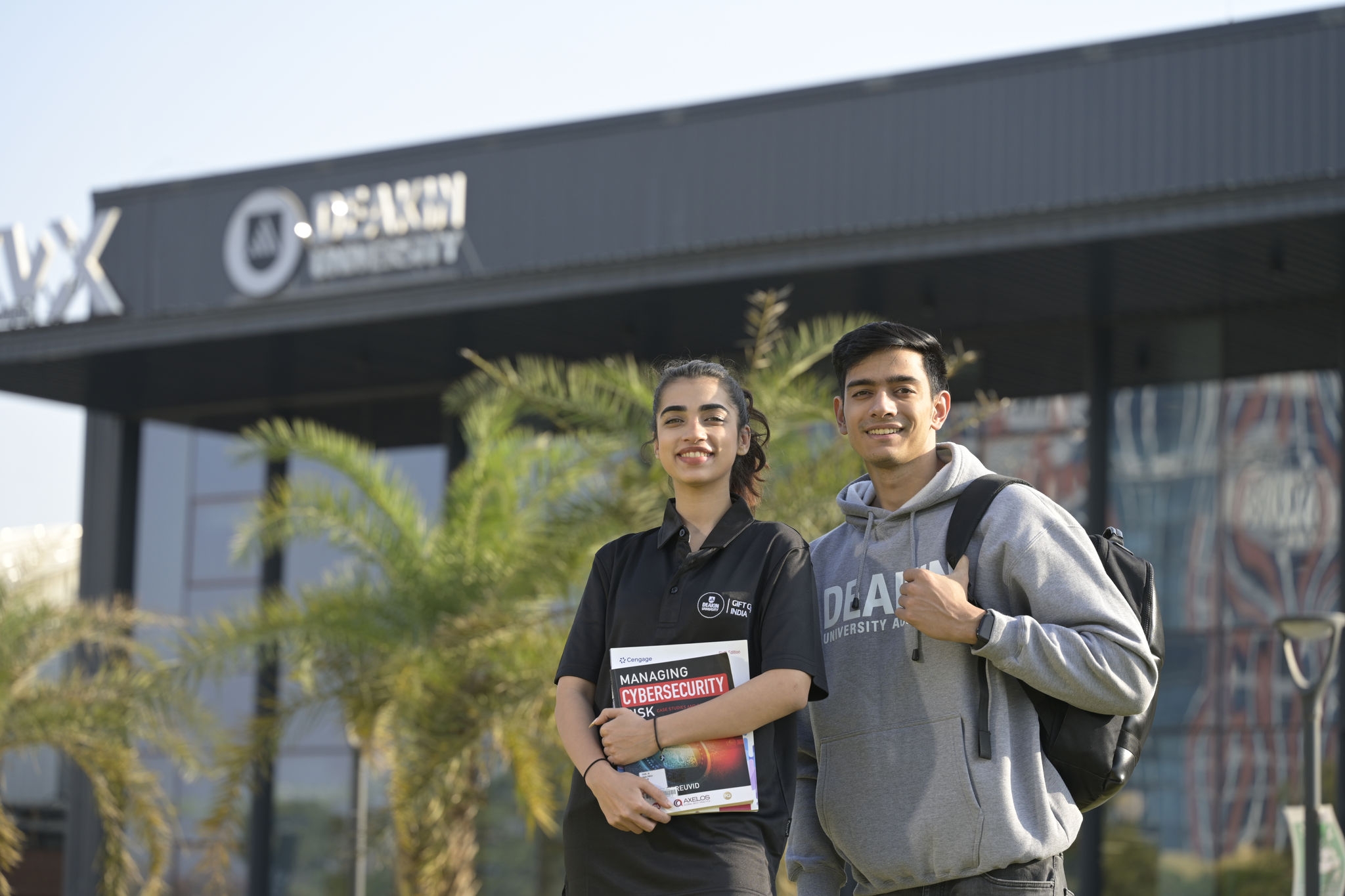
Deakin’s Indian campus graduated its first cohort of master’s students in March 2026.
High academic standards
According to Pawha, success is also attributed to Deakin’s high academic standards.
‘Our master’s degrees conform to Australian academic standards set by TEQSA [the Tertiary Education Quality Standards Agency],’ says Pawha. ‘This means our students’ degrees are fully recognised in Australia.
‘We are extremely pleased with the academic performance of our inaugural graduating cohort. Their assessments, marked in Australia, achieved outcomes comparable to students studying at Deakin’s Australian campuses.’
Top-level academic staff
Deakin’s strong academic outcomes are driven by the quality and calibre of its faculty.
‘We have recruited academic staff from across India,’ says Pawha. ‘Some have international experience, including from Cambridge University. Around one-fifth fly in from Australia for the academic term.
‘Our academics are highly impressed with the Deakin campus,’ she adds. ‘One commented that: “The quality of the curriculum and pedagogy is among the best I have encountered in India.”’
Contributing to India’s future economy
Deakin has now completed recruitment for its fourth cohort of students.
‘We will bring in a new Masters of Artificial Intelligence course in 2027, and we are also talking to regulators about creating short, industry-driven courses,’ says Pawha. ‘Our goal is to help build the GIFT City ecosystem and participate in India’s tech-driven economic progress.
‘We focus on the skills needed in the India of the future. India’s educational landscape is very dynamic. The National Education Policy 2020 has created a different environment, and it enables us to play our part on the global stage.’
Partnership with Austrade
Deakin continues to work with Austrade to increase the profile of Australian education in India.
‘We have supported Deakin for more than 20 years,’ says Vik Singh, Trade and Investment Commissioner, Education, South Asia. ‘This includes helping Deakin build strong market visibility and creating meaningful engagement with schools, institutions and industry partners.
‘Deakin’s success shows Australia–India education partnerships in action,’ he adds. ‘By aligning world-class Australian academic standards with India’s fast-evolving industry needs, this model can deliver highly employable graduates and strengthen the talent pipeline for high-growth sectors.’
‘Austrade has been a valuable partner in strengthening Deakin's brand and engagement in India,’ adds Pawha. ‘We regularly collaborate on events, panel discussions and strategic initiatives that promote Australian education and reinforce the broader Australia–India education partnership.
‘Deakin’s achievement also reflects the broader opportunity for Australian institutions to contribute meaningfully to India’s education system while deepening bilateral ties.’
Go further, faster with Austrade
Austrade’s Go Global Toolkit helps you learn the export basics, find the right markets and understand market requirements.