For Australian businesses experiencing supply chain volatility and disruptions, visit the Go Global Toolkit for the latest updates and support available.
Melbourne Polytechnic is one of Victoria’s largest providers of vocational training. The polytechnic offers more than 170 programs, from VET courses to higher education degrees and short courses.
In recent years, Melbourne Polytechnic has significantly expanded its transnational education footprint in China. It launched new higher education partnerships with Chinese institutions including Xinxiang University and Zhengzhou Shengda University, which commenced delivering bachelor’s degree programs in 2026.
This marks a major step in the institution’s evolution in China, building on its well-established vocational education presence and strengthening its position as a leading Australian provider of in-country international education.
Opportunities for practical education in China
China is Melbourne Polytechnic’s most mature and strategically significant international market. The institution commenced its engagement in China more than 2 decades ago, recognising strong alignment between Australia’s applied education model and China’s demand for high-quality, employment-focused education.
‘China has a very strong demand for high-quality, internationally recognised education, particularly education that is practical and linked to employment outcomes,’ says Tim Gilbert, Vice President International Development at Melbourne Polytechnic.
‘There is also strong policy support for international collaboration, which aligns well with our model. Importantly, we saw an opportunity to deliver Australian education in-country, allowing Chinese students to access global qualifications without needing to study overseas.
‘I suppose that is one of our key differences, and unique selling points,’ he adds. ‘We are confident in our quality assurance mechanisms and, most importantly, our partners, which makes us comfortable in running our programs overseas in full.’
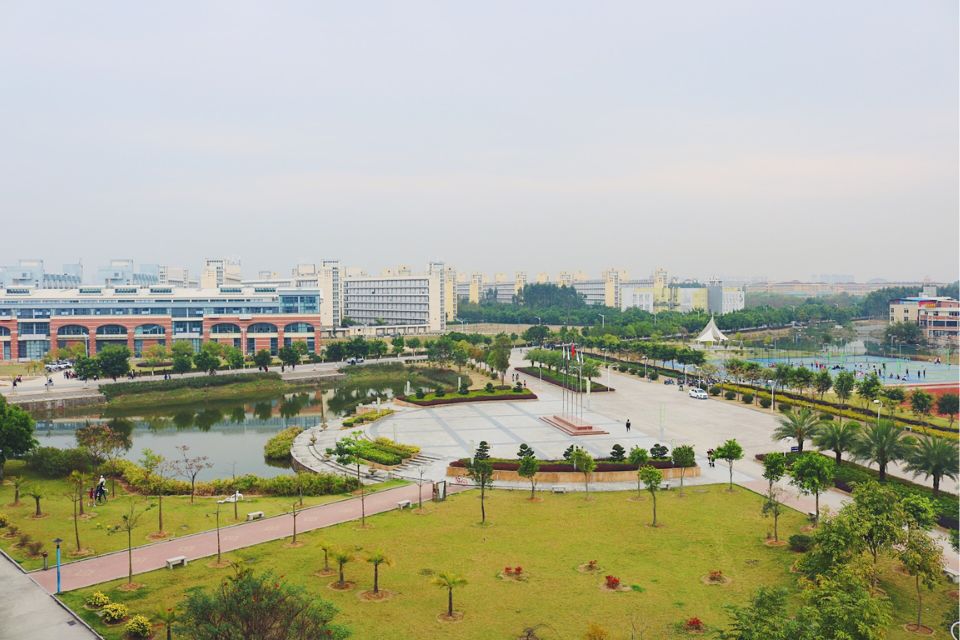
An aerial view of the Fuzhou Melbourne Polytechnic campus.
A unique transnational education model in China
Today, Melbourne Polytechnic delivers a range of vocational and higher education programs in China. These include diploma-level programs and an expanding portfolio of bachelor’s degrees in areas such as architecture, information technology, and agriculture-related disciplines.
A flagship example is Fuzhou Melbourne Polytechnic (FMP). It is one of the most successful transnational education partnerships involving an Australian TAFE institution, and was recognised in the Victorian Government’s China Strategy published in 2025. Through this collaboration, Melbourne Polytechnic delivers Australian curriculum locally in China, supported by local teaching capability and underpinned by Australian quality assurance standards.
This model is distinctive in that it:
- enables students to access Australian qualifications without leaving China
- focuses on applied, industry-relevant learning outcomes
- ensures quality through integrated governance and academic oversight
- operates through long-term, stable partnerships rather than transactional arrangements
- offers pathways to higher qualifications onshore and offshore.
Looking ahead, Melbourne Polytechnic sees strong opportunities in China, particularly in:
- transnational higher education delivery
- STEM and applied disciplines such as engineering, architecture and digital technologies
- integrated pathways between vocational and higher education
- industry-aligned education supporting economic development.
Long-term partnerships underpin success in China
The relationship-led approach has been central to success.
‘Success in China requires a long-term commitment, strong partnerships and a deep understanding of the regulatory environment,’ says Gilbert.
By working closely with local institutions and leveraging experienced in-country representatives, Melbourne Polytechnic has built trusted partnerships that support both delivery and growth.
‘In some ways our success in China is predicated on our long-term engagement,’ says Gilbert. ‘Many of our most successful partnerships did not begin as successful partnerships, they were developed into successful partnerships over many years due to the amazing work of people on both sides, academic champions, and student success.
Gilbert believes the future of transnational success in China is more nuanced than the headline.
‘There are varying needs across the country depending on their regional development status, different capabilities among local institutions and local demographic trends,’ he says.
Melbourne Polytechnic appreciates the support from Austrade, who continue to advocate for the growing engagement of quality Australian education providers in China.
Go further, faster with Austrade
Austrade’s Go Global Toolkit helps you learn the export basics, find the right markets and understand market requirements.