For Australian businesses experiencing supply chain volatility and disruptions, visit the Go Global Toolkit for the latest updates and support available.
Africa is one of the world’s most dynamic frontiers for mining investment and trade. From the established gold and copper belts of West Africa to the rapidly evolving critical minerals landscape in the east, African governments and mine operators are actively seeking partners who can deliver efficiency, safety, sustainability, and operational excellence.
For Australian mining equipment, technology and services (METS) companies, this is a unique window of opportunity. It is a chance to apply world-leading expertise in markets which are expanding, diversifying and eager for high-quality solutions. As infrastructure improves, regulatory environments mature and major projects accelerate, East and West Africa are emerging as regions where Australian innovation and sustainable practices can contribute to the next phase of the continent’s mining growth.
Australian METS companies are well positioned to provide services across the mine lifecycle, catering for the varying stages of markets across the continent. The strong presence of international stakeholders at the recent Africa Down Under Conference highlights Australia’s METS sector as a trusted and innovative global partner in sustainable mining. Austrade’s involvement at next year’s Future Minerals Forum and Electra Mining event will ensure this momentum across the continent continues, and Australian METS businesses are supported in the region.
Ghana: the mining hub of West Africa
West Africa has emerged as one of the most active and resilient mining corridors of the continent, underpinned by a mix of mature gold districts and fast-developing critical minerals opportunities. Countries such as Ghana, Côte d’Ivoire and Burkina Faso attract significant exploration and development capital. Ghana’s political stability, security, and ease of doing business have made it an ideal market for establishing a base from which to service neighbouring countries.
Gold remains the dominant export commodity, with Ghana overtaking South Africa in 2019 to become the largest producer of gold in Africa. As gold accounts for more than 90% of Ghana’s mineral revenue, the government has taken steps to diversify the minerals production base by focusing on bauxite and iron production. The ultimate aim is to build an integrated bauxite-aluminium industry alongside an integrated iron and steel industry. Ghana is also increasing its focus on manganese ore and other critical mineral deposits, broadening the types of services and technologies in demand.
Most mines in the region are open cut, with a historical precedent towards this method of extraction. Underground mining, however, is becoming increasingly popular. While surface mine contracts are being given to local operators, many governments – including Ghana – are pushing for all foreign investors and companies in-market to go underground.
There is also an increased emphasis on local content and participation throughout mine lifecycles. For example, the Minerals Commission of Ghana regularly releases Local Procurement Lists. These lists stipulate the level of Ghanian content required for certain goods and services procured in the country to “[ensure] that mining companies contribute significantly to the socio-economic development of the country.”
Greenfield investment is an increasing priority for governments in the region. Tangible efforts are being made to capture new opportunities and encourage further development. The Ghanian government has vowed to abolish value-added tax on mineral exploration and reconnaissance, removing the 15% tax that Michael Akafia, president of the Ghana Chamber of Mines, claimed had ‘negatively affected our competitiveness as a mining jurisdiction and was a clog on the pipeline of projects.’
METS opportunities
Aligning with global trends, mining companies in West Africa are under pressure to cut costs, increase efficiency, improve the environmental impacts of mining and enhance safety for employees and communities. There is ample opportunity for Australian METS companies to address these goals across the entire mining process. Examples of key opportunity areas include:
- Core mining
- Drill and blast, grade control, load and haul (cycle times optimisation).
- Processing
- Crushing, milling (liners and grading media), trash screening
- Pumps, water treatment, elution, electrowinning, wastewater treatment, land reclamation.
- Energy management
- Electricity reduction (energy savings)
- Fuel burn rate reduction (diesel and gas optimisation).
- Services and analysis
- Geotechnical services (Slope wall design and rock competency analysis)
- Training of technical personnel for underground operations (ventilation officers, hydrogeologists, mechanical operators)
- Fatigue management and predictive technologies
- Data management and analysis tools.
Leading industry associations across West Africa’s mining sector are encouraging foreign companies with relevant capabilities to partner with local companies and produce on-demand products. This includes products such as activated carbon, caustic soda, and grinding media, which are currently being imported at the cost of millions of dollars a year.
Additionally, there are opportunities for partners to develop the value chains of the bauxite-aluminium and iron-steel industries. This includes mining and development; refineries; retrofit smelter; power and downstream products; solar salt; and LBMA-certified operators.
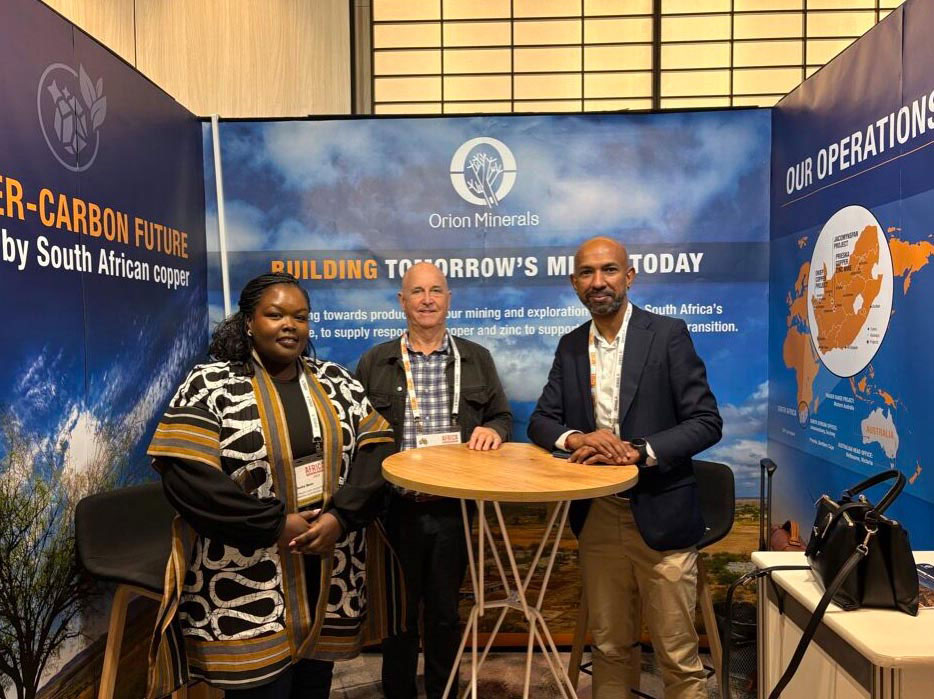
Africa Down Under unites Australian METS firms with Africa’s leading mining companies to scope out supply and partnership opportunities.
East Africa’s emerging resources sector
East Africa is rapidly emerging as a strategic hub for traditional and critical minerals, driven by improving political stability, expanding infrastructure, and a growing cohort of international mining investors.
Tanzania continues to anchor the region’s mining activity, with strong production in gold and a surge of interest in graphite, rare earths and nickel projects linked to global battery supply chains. Kenya, Uganda and Rwanda are also developing further, each progressing reforms to attract exploration capital and diversify their mineral sectors.
Across the region, governments are increasingly focused on creating investor-friendly frameworks which balance resource development with community engagement and sustainable practices. With several high-potential greenfield discoveries and an expanding pipeline of feasibility-stage projects, East Africa presents a compelling and relatively underexplored market for METS companies seeking long-term growth opportunities.
Tanzania
Tanzania’s mining sector leads among the East Africa region, with key mineral deposits including copper, gold, iron and nickel. The Tanzanian government planned for the mining sector to contribute 10% of GDP by the end of 2025. This was reached in April, emphasising the sector’s significant economic impact. Recent changes to the country’s legislative framework reflect a growing sentiment across the region for increased local content in procurement processes.
Kenya
Kenya has recently undertaken several geological assessments across the country, suggesting the presence of rare earth-bearing ore. The Mrima Hill project is the leading large-scale mining project. The prospect, located in Kwale County, represents a strategic opportunity for the government to harness significant niobium and rare earth element (REE) deposits, estimated at over 105 million tonnes.
The Kenya Investment Authority is actively seeking Australian mining investors and companies to explore investment-ready projects, joint ventures, and supply chain opportunities.
Uganda
While much of Uganda’s mining sector has been informal, small-scale and artisanal, there has been a notable shift during 2025 with the inauguration of the country’s first large-scale gold mining and refining operation.
The Ugandan Ministry of Energy and Mineral Development has made major steps towards formalising industrial mining, signalling growing potential for investors and service providers in the market. This is bolstered by its cadastre portal and geological mineral information system, which highlights the country’s available resources. It also explains Uganda’s licencing process, based on a first-come, first-serve basis or competitive bidding rounds, depending on the project.
Rwanda
Similar to Uganda, Rwanda’s mining industry has transitioned towards more formal, industrial-scale mining and mineral processing. Consequently, mining output, export earnings and employment have all increased significantly, supported by new refineries and improved regulation.
METS opportunities
Demand is growing across the region for technology and services that can support both greenfield developments and the expansion of existing mines. Given the range of capabilities across the region, the technological demands vary from market to market. The key areas of opportunity include:
- Consultancy services for bankable/definitive feasibility studies
- Engineering, procurement and construction management
- Contract mining
- Mining equipment supply and servicing
- Logistics and transport
- Bulk storage services
- Exploration
- Drilling and blasting
- Data collection and digitisation
- Education and training
- Geochemistry labs, mobile laboratory services and upgrades to existing lab infrastructure
- Mineral processing and value addition
- Mine safety and equipment
- ESG policy
- Decarbonisation efforts, particularly in areas such as cement.
Engaging with Austrade
The mining sectors across East and West Africa are entering a new phase of growth, defined by diversification, rising critical mineral demand, and a clear shift toward more sustainable, technology-driven operations. These regions present long-term strategic opportunities, where Australian METS expertise can directly shape the continent’s next generation of mining projects.
Austrade is well positioned to support Australian METS companies seeking to explore opportunities in these markets. This can be through facilitating introductions with African companies at events like Africa Down Under or highlighting Australian capabilities across networking functions and side events. Our Business Development Managers based in Accra and Nairobi can help you navigate the regulatory and cultural landscapes and engage with key stakeholders.
To find out more about METS opportunities in Africa, contact Austrade’s METS team.
Go further, faster with Austrade
Austrade’s Go Global Toolkit helps you learn the export basics, find the right markets and understand market requirements.