For Australian businesses experiencing supply chain volatility and disruptions, visit the Go Global Toolkit for the latest updates and support available.
Australian-owned rail engineering specialist, JMD Rail Tech Group (JMDR), is contributing to one of the world’s largest railway transformation programs.
Drawing on decades of Australian rail experience, the company is installing modern signalling and introducing new engineering methodologies and quality-assurance processes to India’s rail system, the fourth largest in the world. This is helping expedite project delivery and enhance safety outcomes.
‘Our Australian heritage enables JMDR to bring proven engineering practices and advanced signalling expertise to India’s rail network,’ says Dilip Goyal, Founder and Managing Director of JMDR.
‘With internationally recognised accreditation, we can train and license signalling engineers in India. This creates opportunities for them to contribute to projects locally and internationally.’
Home-grown railway excellence
Founded in Sydney in 2008, JMDR has grown from a specialist signalling consultancy into an international rail engineering organisation with operations across Australia, New Zealand, the United Kingdom and India.
‘I arrived from India in 1990 and worked for Sydney Trains for 18 years,’ says Goyal. ‘India and Australia share similar standards in railway engineering, so my engineering experience in India was directly relevant.’
Over 2 decades, JMDR has expanded its services to include signalling, telecommunications, testing and commissioning, and nationally accredited rail training. Today, the company’s 400-plus employees and sub-contractors deliver turnkey railway solutions, from civil engineering works to safety and assurance audits.
Taking Australian expertise to India
JMDR established its first Indian office in Mumbai in May 2008.
For Goyal, India was not just an overseas market. He wanted JMDR to build permanent engineering capabilities that would integrate closely with the company’s Australian operations and deliver projects in India. The JMDR strategy focused on creating long-term value through technology transfer, engineering collaboration and workforce development.
‘I knew that JMDR in Australia had the skills to deliver better value for money on signalling projects in India,’ he says. ‘The infrastructure across India Railways is in constant need of upgrade and work on the Delhi Metro had just commenced. This meant there were large budgets for signalling and engineering works, and prospects looked bright.’
The company’s strategy has continued to evolve.
‘There is a large pool of technical resources in India, and the country is home to some excellent railway engineering design,’ says Goyal. ‘We wanted to bring some of that design expertise from India to Australia, and to utilise it in the UK and Canada as well.’
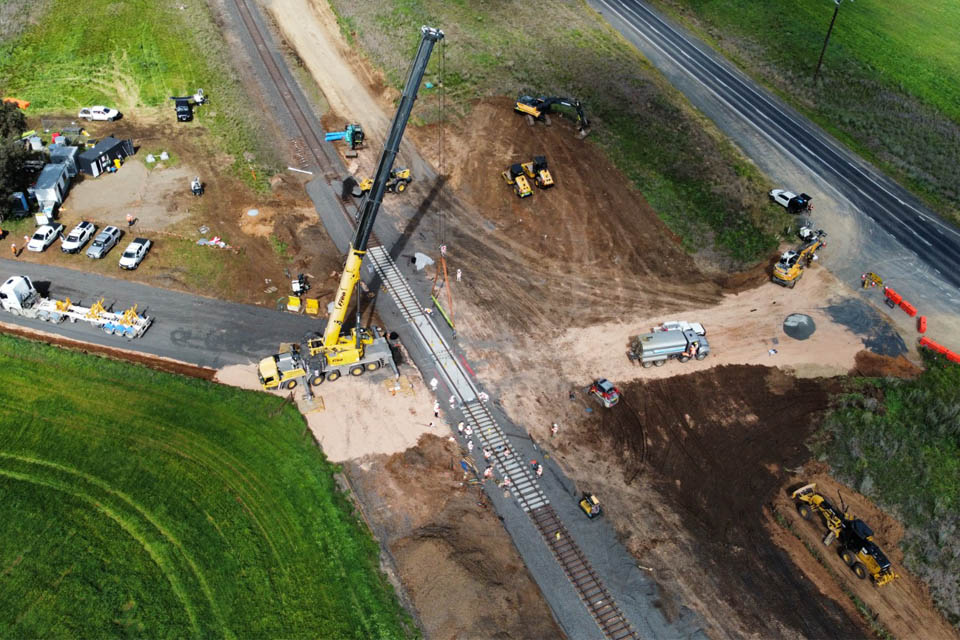
JMDR’s Australian expertise is supporting India to modernise its rail system, the fourth largest in the world.
Improving safety on Indian Railways
JMDR won its first major Indian contract in 2009, providing signalling, installation and commissioning services for 2 new railway stations in Rajasthan.
Since then, the company has grown steadily. JMDR now has 6 offices across India: in Mumbai, Bengaluru, Hyderabad, Thane and 2 in Noida. According to Goyal, one of the most vital improvements JMDR brings to Indian Railways is improved process documentation.
‘One of our points of differentiation is better documentation and record-keeping, especially with construction and testing,’ he says. ‘We maintain and perform detailed checklists and keep records up to date.’
The Delhi Metro and the Dedicated Freight Corridor
Despite intense competition, JMDR has successfully delivered signalling and engineering installation services across 6 metro rail projects. This includes major works for the Delhi and Mumbai Metro networks.
JMDR currently employs around 250 professionals throughout India, partnering with leading international rail organisations to deliver large-scale infrastructure projects across the country.
Among its recent achievements is the successful completion of signalling construction along approximately 350 kilometres of the Dedicated Freight Corridor. This is one of India’s most significant rail infrastructure projects, partially delivered by overseas contractors Alstom and Frauscher.
Skills transfer in India
Alongside project delivery, JMDR invests in developing engineering skills.
JMDR is an authorised assessment agency for the Institution of Railway Signal Engineers (IRSE) in the United Kingdom, making it one of a select number of organisations worldwide authorised to assess and license signalling professionals according to international standards.
‘It is immensely rewarding to see engineers develop their careers through globally recognised accreditation,’ says Goyal. ‘Whether they continue working in India or contribute to projects in Australia, New Zealand or elsewhere, they are equipped with skills that are recognised across the global rail industry.’
Austrade provides industry connections
Nearly 2 decades after launching in India, JMDR shows how Australian engineering excellence and Indian innovation can work together to deliver safer, smarter and more resilient rail networks.
‘We have had great assistance from Austrade over the years,’ says Goyal. ‘Austrade advisers have provided JMDR with in-market support for our growth in India.
‘The railways in India are booming. Today, there is more than A$100 billion-worth of upgrade and build works in progress across the country. Austrade advisers have helped us to broaden our horizons.’
Go further, faster with Austrade
Austrade’s Go Global Toolkit helps you learn the export basics, find the right markets and understand market requirements.