For Australian businesses experiencing supply chain volatility and disruptions, visit the Go Global Toolkit for the latest updates and support available.
By 2030, India’s demand for potable – or drinkable – water is projected to be twice the current supply. Building new water filtration plants is costly and will take time. The alternatives: more sustainable water management, more efficient water purification, and international collaboration.
Australia’s James Cumming will help with all three. Following a 2025 Austrade delegation to India, the Australian family company is shipping water-purification material and technology to India. High demand means India has quickly become the company’s largest overseas market.
‘Improving water quality is a key priority in India,’ says John Cumming, Chief Executive of James Cumming. ‘Some major cities, like Mumbai, have restricted water supply. We are helping water companies maximise what they can do with existing infrastructure – and we can already see the impact.’
Fourth-generation filtration expertise
James Cumming manufactures Australian filter coal and activated carbon, which are used in water and wastewater treatment. The company is a leader in its field. Established in 1909, it has supplied Australian water authorities for more than 110 years and its products have been used in more than 950 treatment plants.
The company is now led by John Cumming, the great-grandson of the founder. Under his leadership, the company is steadily expanding. Part of its business now involves environmental remediation.
‘We are essentially a minerals-processing and manufacturing company,’ says Cumming. ‘Our filtration products and technology mean that water companies can buy a lower volume of water-filter material – or media – and still improve their filtration rates. We export to 25-plus countries, mostly in Asia.’
Fresh opportunities in India
In 2022, a water management executive in India contacted James Cumming. The war in Ukraine had disrupted supplies to India, and the contact was looking for alternatives. The catch was that filtration material needed to meet strict European standards.
‘We fostered that contact because we could see India as major source of export growth,’ says Cumming. ‘Our pitch to companies was that they could retrofit our filtration media into existing water treatment plants and thereby increase output without additional capital costs.
‘As a small business, however, it was hard for us to make progress. We had to identify potential customers, send samples and run pilots. After 3 years, we had only signed a few, minor beach-head contracts.
‘Then in mid-2025, Austrade announced a delegation to India specifically for companies involved in the water industry. This was a major opportunity.’
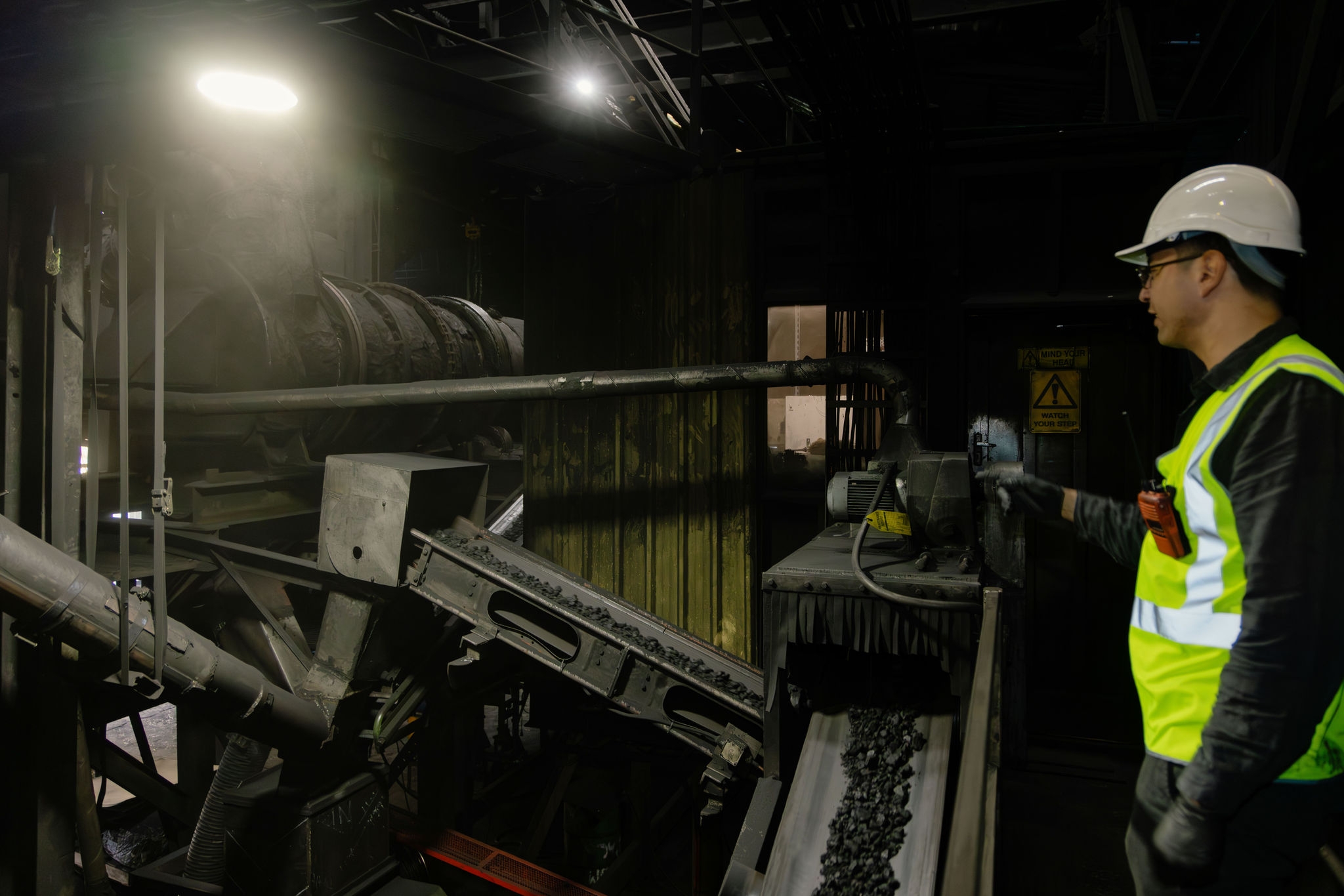
James Cumming’s filter coal and activated carbon products are helping Indian water organisations to improve water quality.
Taking Australian water expertise to India
The delegation sprang from an existing Austrade initiative: the India-Australia Water Accelerator Program. The program was designed to help Australian companies understand water management priorities in India and identify potential partners.
The week-long mission was organised by Austrade and supported by the Confederation of Indian Industry and the Government of South Australia.
‘I travelled to India in October 2025 as part of the inaugural delegation,’ says Cumming. ‘We went to Mumbai and Chennai, and Austrade organised meetings with utilities, peak bodies, government officials and industry leaders. Austrade also arranged networking events.’
James Cumming exhibited at the Australian Pavilion at IFAT 2025, India’s largest trade fair for water, sewage, solid waste and recycling. Cumming says that working via Austrade proved critical.
‘The badge of government opens doors,’ he says. ‘Also, we got to see how the water treatment industry works in India. The way companies transact business in India is very different to how we work in Australia. We needed to go there to make progress.’
India delivers 20% growth in export sales
James Cumming signed multiple contracts following the visit, and export volumes expanded rapidly in early 2026.
‘Over the last 6 months, exports to India have grown so quickly they account for around 20% of sales,’ says Cumming. ‘During the last financial year, our business has grown by 25% and India has powered that growth.’
Export diversification is also helping the company become more competitive.
‘The growth in exports is helping us to scale our business. This in turn makes our minerals processing more efficient,’ he says.
Advice for Australian exporters
Given the swift impact that India has had on business, Cumming believes his experience provides valuable lessons.
‘Being competitive in India is a real challenge,’ he says. ‘Our solution was to establish a permanent presence in India via a distributor. During the delegation, my business development manager and our India-based distributor and territory director split off to visit potential customers.
‘Transactions are based on trust, so you need to go over there regularly. My plan is to go back to India every 18 months.’
Cumming also advises exporters to:
- have a clear, concise strategy before you go and focus on where you will bring value.
- find a partner in India who will help you execute your strategy: they will give you local expertise and knowledge.
Austrade arranges access
Cumming says potential exporters should engage with Austrade’s India-based advisers.
‘Austrade can get you to the people you need to see,’ he says. ‘Austrade asked us for a list of the top 10 customers we wanted to see during the delegation, and they had 4 of the CEOs there to meet us!
‘Some of these companies are multi-billion-dollar contractors, so it is very hard to pitch as an SME. But access is what Austrade is able to do – and it matters in India, because you need to speak to the right authority level.’
Cumming calculates he saved money by participating in an Austrade stand.
‘If we had tried to organise our own stand at IFAT 2025, it would have cost us $15,000–$20,000,’ he says. ‘Instead, we got the Austrade brand, a conversation booth, clear support from the Australian Government – and it only cost us $2,000.
‘We have done plenty of delegations, but what Austrade was able to do made the India trip easily the best.
‘India is a hard market to conquer. It has taken us 117 years to get there – but it is definitely worth it.’
Go further, faster with Austrade
Austrade’s Go Global Toolkit helps you learn the export basics, find the right markets and understand market requirements.