For Australian businesses experiencing supply chain volatility and disruptions, visit the Go Global Toolkit for the latest updates and support available.
Presented by Shark Beauty, Australian Fashion Week (AFW) 2026 has wrapped in Sydney, bringing together designers, international buyers and industry leaders with a strong focus on commercial outcomes and export diversification.
The event was delivered by the Australian Fashion Council (AFC) – a member of the Trade Diversification Network (TDN) – and supported through the Australian Government’s $55 million Accessing New Markets Initiative (ANMI), strengthening industry resilience and global competitiveness.
Strong global interest and industry momentum
This year’s program showcased 38 Australian fashion houses, including Aje, Beare Park, Bianca Spender, Carla Zampatti, Farage and Maticevski, alongside emerging and First Nations designers such as Buluuy Mirrii and Van Ermel Scherer. The designers showcased their fashion across 31 runways and 51 events throughout the week.
AFW attracted 14 international delegates from priority markets, including the United States, United Kingdom, Europe and the Middle East, creating direct pathways between Australian designers and global decision-makers.
AFC Executive Chair Marianne Perkovic says the quality of buyers reflected the impact of coordinated industry support.
‘Being part of the TDN has enabled us to attract a very high calibre of buyers and media for Australian Fashion Week,’ she says. ‘This funding has directly enhanced our international program and create serious pathways into global markets for our designers.’
For designers on the ground, the value of AFW also lies in the connections it fosters across the industry. Julie Shaw, founder and creative director of Mara Collective, says the event plays a vital role in strengthening the sector’s collective ecosystem.
‘Just to be here and be part of it, networking and connecting with other designers and colleagues... as well as buyers and media... just helps to build our ecosystem and our Australian fashion community and bring us all together.’
The official opening at Kirribilli House, hosted by Jodie Haydon, underscored the sector’s role as both a cultural contributor and a major economic driver. Australia’s fashion industry contributes $27.2 billion to the economy and $7.2 billion in exports annually.
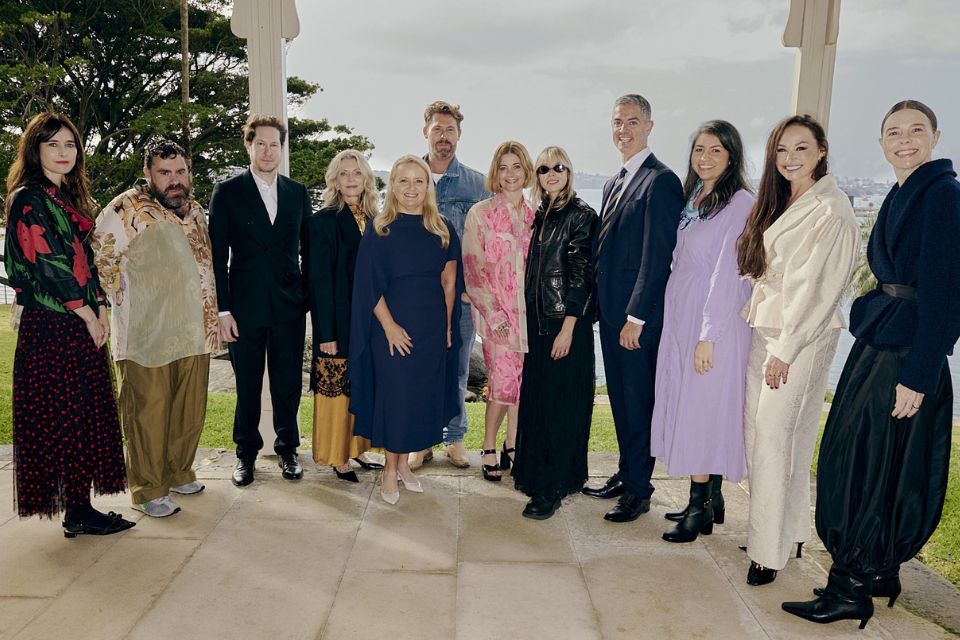
ANMI is supporting the Australian fashion industry to connect with international buyers and media, and with each other. Photo credit: Sonny Vandevelde.
Strengthening trade through ANMI
Central to AFW 2026 was the International Trade & Buyer Engagement Program, funded through ANMI. The program delivered targeted buyer engagement, curated introductions, one-on-one meetings and post-event follow-up designed to convert connections into commercial outcomes.
By concentrating trade activity into a single national platform, the initiative reduced the cost of international market access while maximising exposure, particularly for SMEs and First Nations brands.
Marianne Perkovic highlights the broader benefits of the TDN in driving collaboration across the industry.
‘We're grateful to be part of the TDN,’ she says. ‘It’s enabling us to collaborate and show up as an Australian fashion cohort and that’s so important. It’s important to allow our brands to support each other because we are stronger together.
‘When industry works as one, our impact on the Australian economy can be even more significant.’
A resilient sector navigating global pressures
Despite ongoing global challenges increasing the cost of doing business and exporting, the sector continues to adapt. AFW 2026 demonstrated how targeted support can unlock new opportunities by bringing international buyers to Australia.
‘Global conditions have lifted the cost of doing business and exporting for our brands,’ says Perkovic. ‘But this is a resilient sector. Through the funding, we've been able to bring the world to Australia, and our industry has turned that into real opportunity.’
Positioning Australian fashion for growth
Alongside runway presentations, AFW Talks presented by Afterpay explored strategies for international expansion. Industry leaders highlighted the importance of brand positioning, partnerships and adaptability in global markets.
With strong international engagement and a clear focus on trade outcomes, AFW 2026 demonstrated how coordinated industry and government action can support Australian businesses to scale globally. Initiatives like ANMI and TDN are positioning Australian fashion and textiles as a premium, export-ready sector, connecting local creativity with growing international demand.
Go further, faster with Austrade
Austrade’s Go Global Toolkit helps you learn the export basics, find the right markets and understand market requirements.