For Australian businesses experiencing supply chain volatility and disruptions, visit the Go Global Toolkit for the latest updates and support available.
The Australian fruit industry was out in force at two key Asian horticulture trade shows, showcasing the quality, reliability and innovation Australian producers are renowned for.
Exporters and horticulture peak bodies and associations travelled to the China International Fruit Expo in Shanghai in late August and Asia Fruit Logistica in Hong Kong in early September.
This year, support from the Accessing New Markets Initiative (ANMI) enhanced Australia’s presence at both trade shows. Austrade partnered with Trade Diversification Network (TDN) member the Australian Table Grape Association to bring a consortium of emerging horticultural export industries to the shows.
This provided opportunities for newer entrants and those looking to diversify to learn more about the unique demands of the Chinese, Hong Kong and broader Asian fruit markets. In turn, buyers had the chance to experience the depth and breadth of Australia’s offerings, including apples, pears, mangoes, table grapes, avocadoes, berries, cherries, citrus, melons, summer fruit and dried fruits.
Australian Table Grapes Association CEO Jeff Scott says the multi-industry approach supported by ANMI is a blueprint for the horticulture sector’s future approach to market.
‘The more that horticulture industries can work together, [the more] it’s going to be a win-win for everybody,’ Scott says. ‘We can’t work in silos anymore going forward.’
Trade shows open the door to Asia-wide opportunities
Trade shows like China International Fruit Expo (CIFE) and Asia Fruit Logistica are gateways to opportunities across Asia. These events attract thousands of visitors, exhibitors, buyers, importers and distributors across the region – all looking for new opportunities, connections and innovations.
In Shanghai, CIFE drew over 22,900 attendees and more than 300 exhibitors from 58 countries and regions. The show is becoming an important meeting place for China’s domestic fruit trade. Its concentration of mainland importers and decision-makers allows Australian industries to explore specific routes to market, gather product feedback and develop relationships ahead of future access.
‘We were thrilled to return to CIFE with an Australian Pavilion that doubled in size and with twice the number of exhibitors,’ says Stephanie Smith, Austrade Trade and Investment Commissioner. ‘The expanded platform allowed our growers to showcase a wider variety of Australia’s premium, safe, and sustainable produce, connect with global partners and unlock new commercial opportunities.’
In Hong Kong, Asia Fruit Logistica drew 16,000 attendees and more than 760 exhibitors from 41 countries. In the lead up to Asia Fruit Logistica, Austrade invited 595 international buyers from 270 companies to meet with Australian exporters, ultimately facilitating over 280 business-matching meetings between exporters and buyers from across Asia at the show.
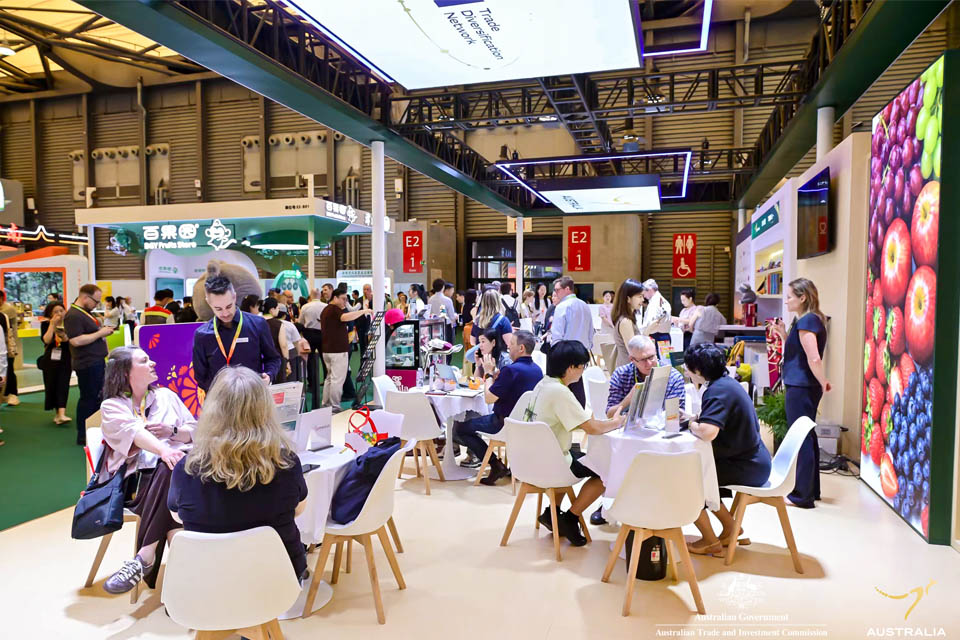
There were plenty of discussions taking place at the Australian Pavilion at the China International Fruit Expo.
Paving the way for market entry
The trade shows provided emerging industries and their members to explore potential markets, understanding consumer needs, build commercial relationships and gauge demand.
Berries Australia used CIFE to gather intelligence and develop industry relationships ahead of potential access.
‘When we do get market access, we’ll have a really good running start,’ says Jess White from Berries Australia. ‘ANMI has been an important support mechanism for our industry to get to know China better in advance.’
Growing opportunities in China’s regional markets
Opportunities are emerging beyond Beijing, Shanghai and Guangzhou, opening new commercial pathways in under-served markets where demand for imported fruit is growing fastest.
The Australian Table Grape Association recently led an ANMI-funded horticulture mission to Tier 2 and regional centres in China to help exporters develop a deeper understanding of market opportunities, distribution models and retail channels.
‘These cities don’t receive too much international fruit,’ says ATGA’s Jeff Scott. ‘Even if we were to send 5,000 to 10,000 tonnes into those markets, that’s a great diversification opportunity.’
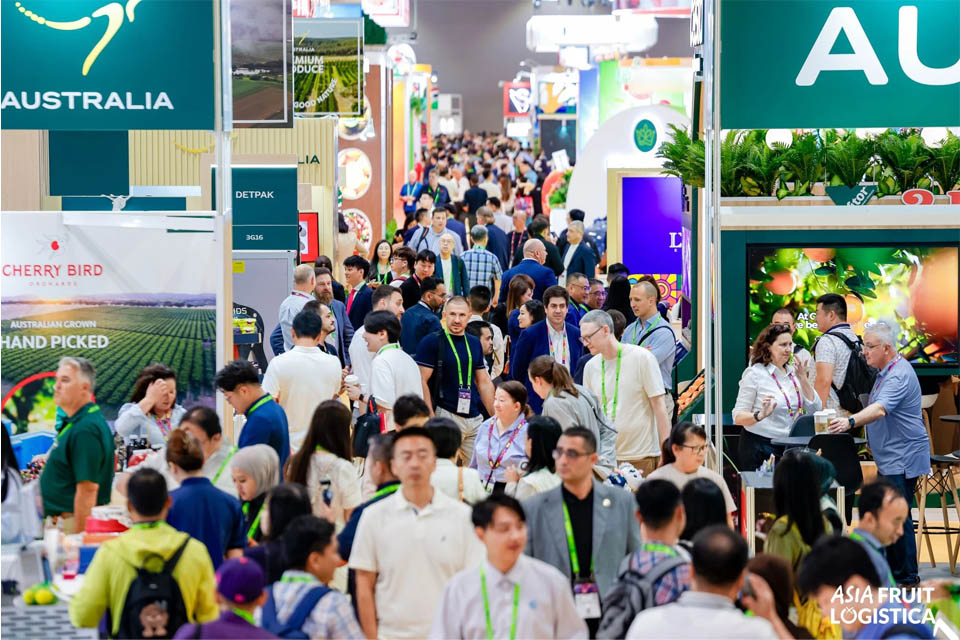
Australian exporters and industry bodies connected with thousands of buyers and importers at Asia Fruit Logistica.
Meeting local tastes
Growers looking to export to China may need to reconsider varieties, presentation and the occasions where consumers buy fruit.
Group Head of Production Supply at Apple and Pear Australia, Justin Smith, says apple producers only gained access to the China market this year. Already, there are clear opportunities to fill a niche by offering sweeter varietals to suit Chinese tastes.
‘There’s a real opportunity for the upper-end of our industry,’ says Smith. ‘There’s long-term potential in China – but we need to make sure we do our part correctly and that we service our Chinese customers really well.’
Asian consumers like to gift fruit, particularly cherries, grapes, citrus and stonefruit, for occasions such as Lunar New Year and the Mid-Autumn Festival. Consumers are looking for fruit that is presented in high-end, visually appealing packaging.
‘Consumers and the retail sector consider Australian produce to be safe and of high quality,’ says Cherry Growers Association CEO Penny Measham. ‘Importers are willing to pay the price point that we need.’
Government and industry partnering to support exporters
Support from ANMI has made a profound impact on the ability of TDN industry bodies to support their members.
Summerfruit Australia Limited CEO Katherine Faull says opportunities and funding through ANMI are ‘critical for supporting our industry.’
‘It’s also really important to be able to collaborate with other peak industry bodies,’ Faull adds. ‘We’ve identified numerous opportunities to work with Austrade, Hort Innovation and other commodities to tackle shared challenges and maximise shared opportunities.’
General Manager of Trade and Biosecurity R&D at Hort Innovation Australia, Mila Bristow, says it’s important the Australian horticulture industry diversifies to continue its growth trajectory.
‘Horticulture in Australia is growing; the importance of export is growing – so finding new markets really will support our current production pace,’ Bristow says.
‘It takes partnerships, shared intent and a Nation Brand understanding of why we want to be here, what we are doing and what we are trying to achieve for Australian horticulture.’
Go further, faster with Austrade
Austrade’s Go Global Toolkit helps you learn the export basics, find the right markets and understand market requirements.